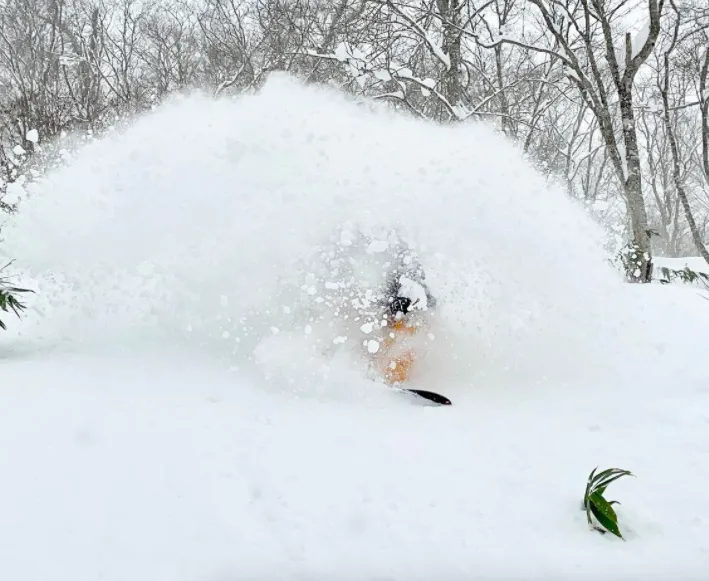



Japan receives some of the heaviest and most reliable snowfall in the world. The reason is a powerful winter weather pattern that forms between Siberia and the Sea of Japan. Cold, dry air from the continent absorbs moisture over the warmer sea, then releases it as heavy snow when it reaches Japan’s mountains. This process repeats throughout winter, creating exceptional snowfall and the famous light powder found in Japan’s northern ski regions.
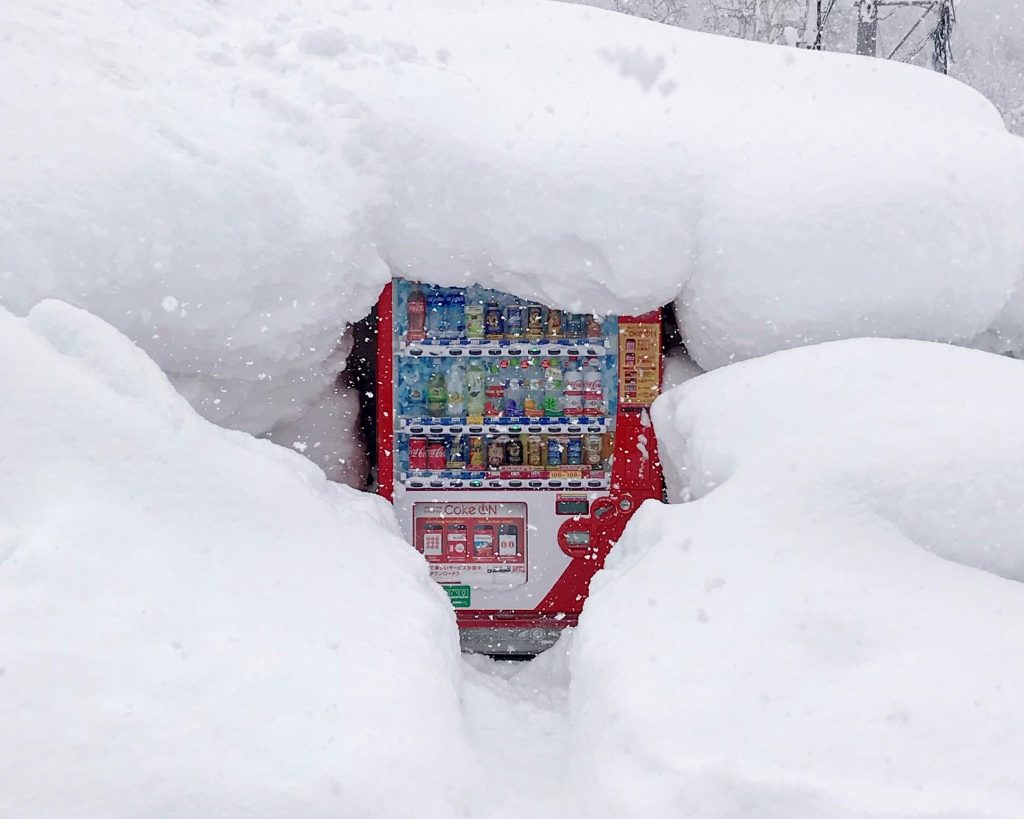
Japan receives extraordinary snowfall each winter, particularly along the northwestern coastline of Honshu and across much of Hokkaido. Many visitors assume this is simply because Japan sits at a northern latitude, but location alone cannot explain the huge totals. The real reason is a winter weather engine that switches on every year and operates with remarkable consistency.
As winter begins, the vast landmass of Siberia cools very quickly due to limited sunlight and the fact that land loses heat much faster than water. The air above Siberia becomes extremely cold and dense, which leads to the formation of a large and stable high-pressure system known as the Siberian High. At the same time, the North Pacific retains heat far longer than the land, allowing the air above it to stay much warmer. This creates a broad low-pressure system known as the Aleutian Low.
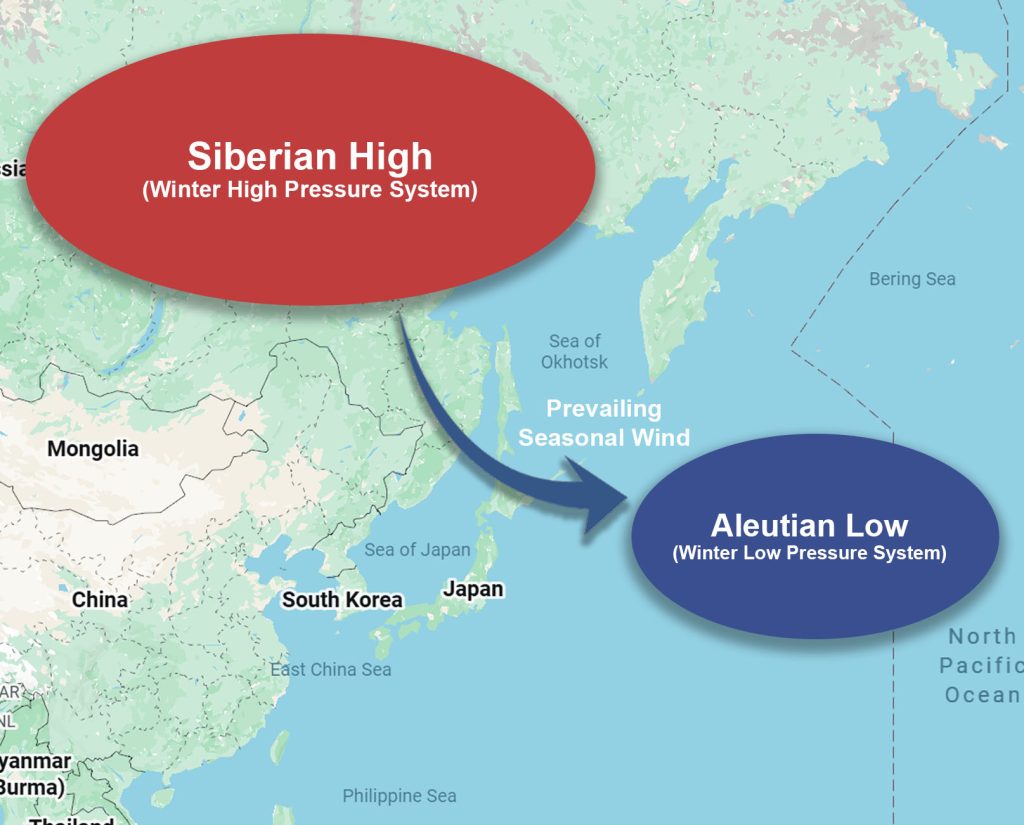
Image: Siberian high pressure system and Aleutian low pressure system in winter
The difference in pressure between the cold Siberian High and the milder Aleutian Low causes air to flow from the continent toward the Pacific. This produces strong, steady northwesterly winds that dominate East Asia throughout winter. These winds carry very cold, dry air from Siberia directly toward Japan.
When this air reaches the Sea of Japan, it encounters water that is significantly warmer than the air above it, particularly in the south where the Tsushima Warm Current raises surface temperatures. The contrast between the cold air and the warmer water leads to rapid heat exchange. The sea releases moisture into the passing air mass, and the air becomes increasingly humid as it moves eastward.
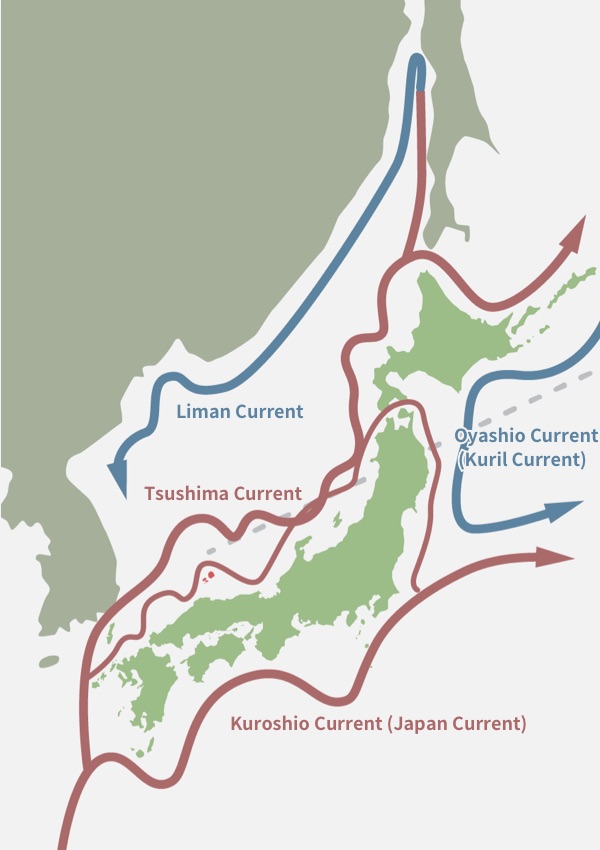
Tsushima Warm Current Provides Water Vapor for Snow Formation. (Image: Oki Geopark)
Once this moisture-filled air reaches Japan, it is forced upward by the mountain ranges that run close to the coastline. As the air rises, it cools again and releases its moisture as dense cloud and heavy snowfall. This orographic lifting is especially effective in regions such as Hokkaido, Niigata and Nagano where mountains rise sharply from the coast. Because the pattern is so stable, the snowfall it produces is both frequent and consistent.
Resorts such as Niseko, Rusutsu, Furano and Kiroro experience this pattern almost daily. Snowfall or thick cloud cover is common, which prevents melting between storms and keeps temperatures stable. Niseko, for example, is close to the ocean and sits at relatively low altitude, yet maintains winter temperatures between about minus three and minus eight degrees, which is ideal for skiing and for maintaining snow quality.

Another important part of this system is the way it produces Japan’s famous light powder snow. As the cold continental air crosses the relatively warm Sea of Japan, it absorbs large amounts of water vapour. This high moisture content helps form large, well-defined snow crystals. When these crystals reach land, they fall through air that is consistently cold, often around minus five to minus eight degrees in many Hokkaido regions. These temperatures preserve the structure of the crystals so they do not melt or compact as they fall. When they accumulate, the flakes settle with plenty of space between them, creating the deep, dry and incredibly soft powder for which Japan is known.
Further south, Hakuba sits at higher elevation in the Japanese Alps. It can receive immense snowfall when major cold-air outbreaks occur, and its alpine terrain often produces drier snow on colder days. The pattern is more variable than in Hokkaido, but when conditions align, Hakuba can experience some of the biggest single storms in Japan.
When all of these factors come together, Japan becomes one of the snowiest places on earth. The combination of cold continental air, warm ocean water, strong winter winds and steep coastal mountains forms a natural system that produces exceptional snowfall year after year. It is a rare alignment of geographic and climatic features, and it is the foundation of the snow that has made Japan one of the world’s most celebrated winter destinations. Charts and details can be found on the Japan Meteorological Agency.