



The slopes of Niseko are now synonymous with world-class powder, but the history of Niseko and how Japan’s most famous ski area came to be is a century in the making. What began with a handful of pioneering skiers has evolved into a unified network of four resorts known collectively as Niseko United, where the All-Mountain Pass allows visitors to explore the entire mountain seamlessly.
History of Niseko & Early Beginnings
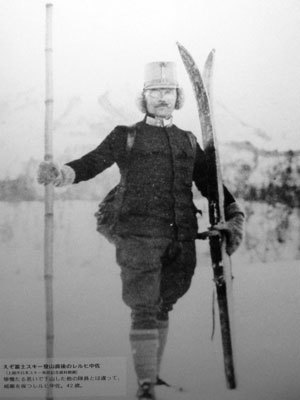
Skiing would not arrive in Niseko until the early 20th century, when Austrian Lieutenant Colonel Theodor von Lerch introduced the sport to Japan. In 1912, von Lerch visited Kutchan and became the first person known to climb and ski down Mount Yotei. His achievement drew national attention and sparked Japan’s early fascination with skiing.
Fifteen years later, in 1927, Japan sent its first delegation to the Winter Olympics in St. Moritz, Switzerland. That same year, Prince Chichibu travelled to Hokkaido and was captivated by the snow quality and scenery of Niseko. The local onsen of Yukichichibu was even named after Prince Chichibu in respect to his visit. Local newspapers dubbed the area “The St. Moritz of the East,” a nickname that reflected growing pride in the region’s natural ski potential.
The link between Kutchan and St. Moritz became official in 1964, when Kutchan’s mayor, Seikichi Takahashi, established a sister-city relationship with the Swiss resort adding a significant milestone in the history of Niseko. Reminders of that friendship remain today, from the St. Moritz Bridge crossing into Hirafu to the commemorative plaques displayed throughout town.
The Birth of the Ski Resorts
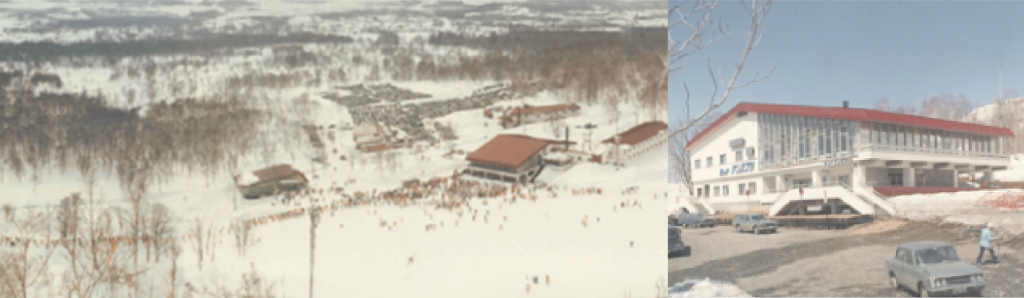
Niseko’s transformation from rural farmland to ski destination began in the 1960s. On 17 December 1961, Niseko Kogen Kanko Co. Ltd. opened the first lifts at what is now Grand Hirafu, named after the nearby train station of Hirafu. The following winter, the resort hosted the All-Japan Ski Championship, confirming Niseko’s growing reputation as one of Japan’s leading alpine centres.
By 1965, new lifts operated by the St. Moritz Lift Company connected more slopes in Hirafu and Moiwa, further expanding access. Development accelerated after the 1972 Sapporo Winter Olympics, which boosted national interest in skiing and attracted investment across Hokkaido. In the same year, Chuo Bus Co. Ltd. established the Annupuri Ski Resort on the southern side of Mount Annupuri.
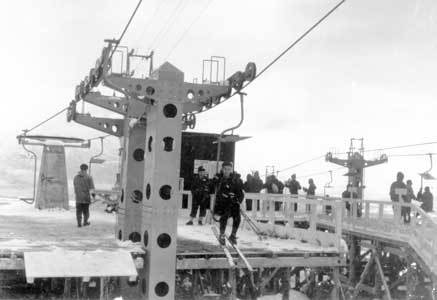
The 1980s brought major advances, with the opening of Niseko Higashiyama Ski Resort (now Niseko Village) in 1982, along with the introduction of high-speed quad lifts and gondolas that modernised the mountain’s infrastructure.
The final piece of the Niseko puzzle arrived in 1992, when Tokyu Land Corporation launched Hanazono Ski Resort on the mountain’s northern flank. In 2004, Tokyu Land Corporation acquired the Alpen Lifts owned by the St. Moritz Lift Company, consolidating its position as the sole owner and operator of Grand Hirafu Ski Resort.
That same year, Hanazono was sold by Tokyu Land Corporation to Nihon Harmony Resorts KK, marking the beginning of a new era for the area. Three years later, in 2007, Pacific Century Premium Developments (PCPD), a Hong Kong–based company, acquired Nihon Harmony Resorts and continues to own and operate Hanazono under the Nihon Harmony Resorts brand today.
By this point, Niseko had four distinct resorts surrounding Mount Annupuri: Annupuri, Grand Hirafu, Niseko Village, and Hanazono, each with its own management, base area, and personality, yet all connected at the summit and united by shared lift access.
The Niseko Free Passport – All Mountain Pass
Over the history of Niseko, these resorts operated independently, meaning visitors had to buy separate lift passes to ski different areas. That changed in November 1993, when the Niseko Free Passport was introduced. It was Hokkaido’s first automated common lift-ticket gate system, uniting Annupuri International, Grand Hirafu, Niseko Higashiyama, and Niseko Hanazono under a single ticket.
The early version of the Free Passport excluded a few lifts, but by 1998, every lift on the mountain was included, allowing skiers and snowboarders to move freely from one resort to another. The system became the foundation of what is now the All-Mountain Pass; the key feature that transformed Niseko into one of the largest interconnected ski areas in Asia.

Niseko’s History – Economic Highs and Lows
Japan’s booming economy in the 1980s drove rapid resort expansion. New lifts, hotels in Niseko, and ski centres appeared across Niseko, supported by national policies that encouraged domestic travel and holidays. The momentum stalled in the early 1990s when Japan entered a prolonged recession, halting major developments and leaving many resorts across the country struggling.
Niseko’s revival began in the early 2000s, when foreign visitors, particularly Australians, discovered the area’s exceptional snow conditions. This new international interest reinvigorated the region, bringing investment and renewed energy to local businesses.
In 2004, Tokyu Land Corporation consolidated ownership of Grand Hirafu by acquiring the remaining St. Moritz Lift Company assets, while Nihon Harmony Resorts KK purchased Hanazono. Though each resort retained independent ownership, their cooperation continued under the shared Niseko United brand and the long-established All-Mountain Pass system.

From Pioneers to Powder Capital
Over six decades, the history of Niseko and it’s ski culture has evolved from a local pastime into a defining symbol of Japanese winter tourism. The establishment of Annupuri in 1972, the introduction of the Niseko Free Passport in 1993, and the unification of lift systems by 1998 mark key milestones in that journey.
Today, the four resorts of Annupuri, Grand Hirafu, Niseko Village, and Hanazono operate together as Niseko United, offering a single connected mountain with more than 50 runs, modern lifts, and terrain suited to every level.